Why we are studying black soldier fly frass in cities
We believe sustainable agriculture means thinking ecologically. Farms are part of a larger web of people, food, waste, soil, insects, plants, and cities. In a city, organic waste is often treated as a problem to remove. Seen another way, it is a local resource that can support food production.
Black soldier fly larvae can convert food scraps and other organic materials into insect biomass. They leave behind frass, a nutrient-rich material that may work as a soil amendment or fertilizer. We are asking whether cities can use their own organic waste to support healthier, more circular, and more resilient urban agriculture.
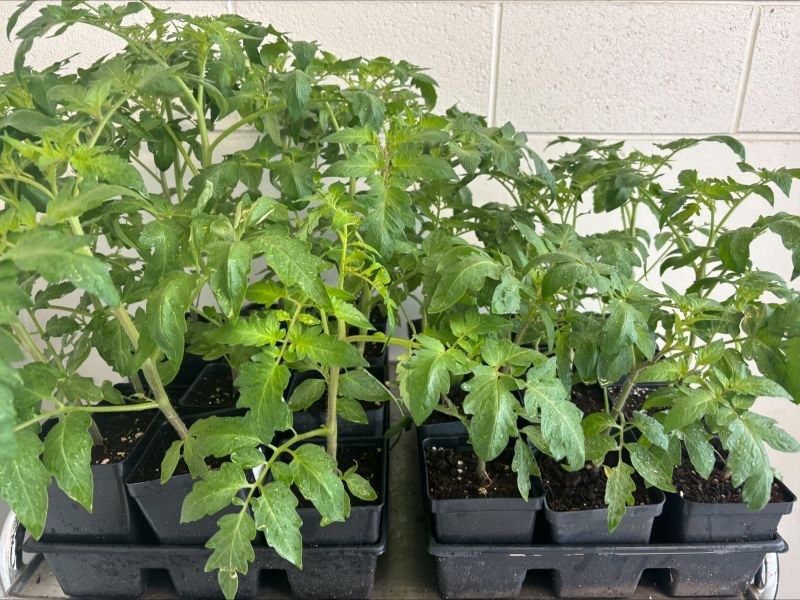
Tomato plants grown with black soldier fly frass (left) and without it (right).
This research is funded by a Northeast Sustainable Agriculture Research and Education (SARE) partnership grant.
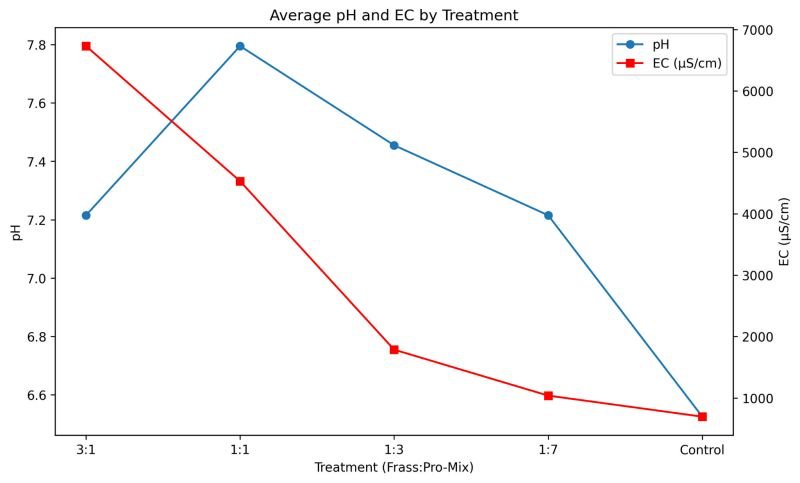
Many of our trials showed that frass can strongly inhibit seed germination. Our early measurements of pH and electrical conductivity tell part of the story. Electrical conductivity is a measure of nutrient concentration.
Electrical conductivity above 4,000 microsiemens per centimeter is known to suppress germination. Mixes of 75% and 50% frass with a commercial growing mix were above that level. That matches our on-farm findings of very low germination in those mixes. Mixes of 25% and 12% frass were below it.
Those lower mixes are our next targets for on-farm studies. How will microgreens, hydroponic leafy greens, and vegetable starts perform in growing media with 25% to 12% frass?
Average pH and electrical conductivity by mix of frass to commercial growing mix.
This research is funded by a Northeast Sustainable Agriculture Research and Education (SARE) grant.
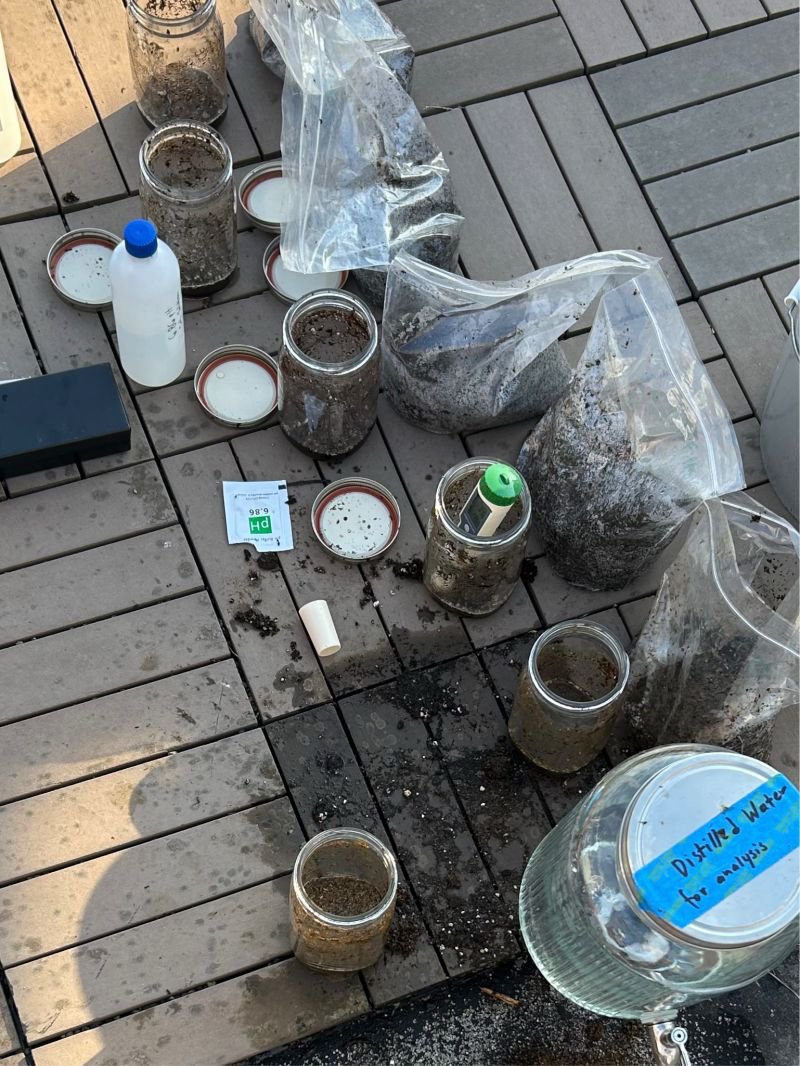
We set up this field “lab” between 4:30 and 5:00 in the afternoon. In just 30 minutes, we ran 16 soil analyses measuring pH and electrical conductivity. It needed no formal lab and no expensive equipment. We used:
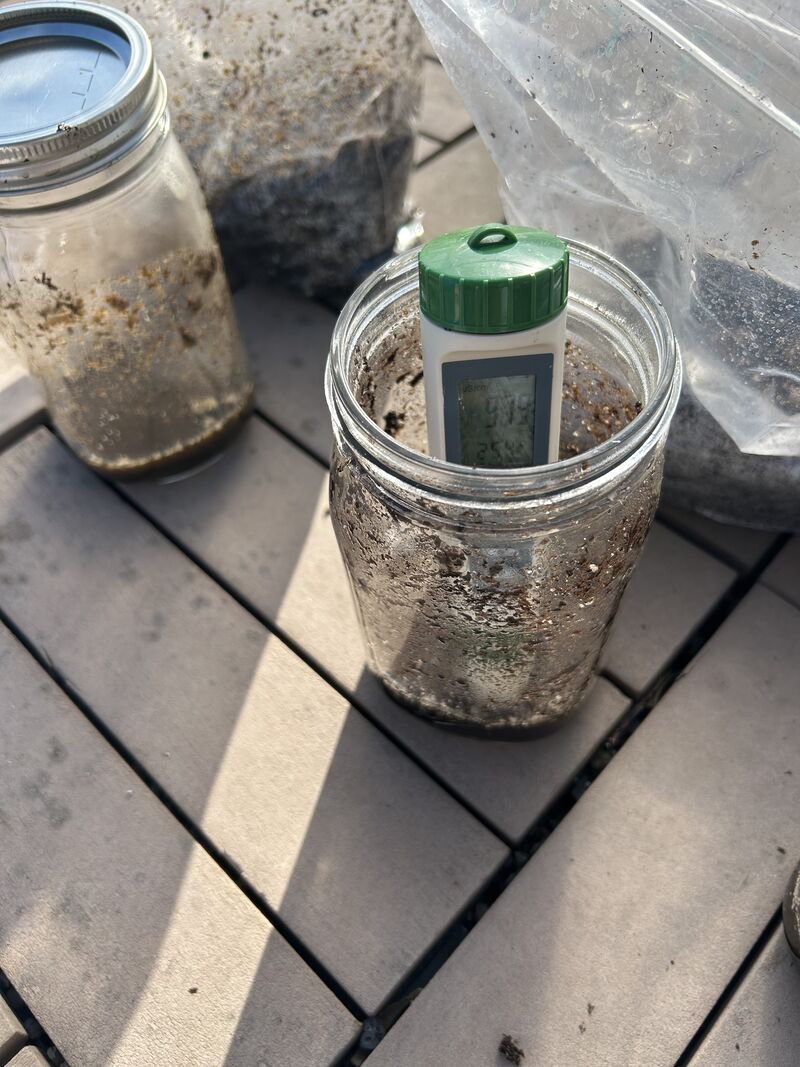
A sensor that costs about $30 and measures pH and electrical conductivity
Distilled water, which can be made locally, even with a solar still
Eight mason jars
A simple, standardized method
Soil samples in mason jars, with distilled water for analysis.A low-cost sensor reading pH and electrical conductivity in a soil and water sample.
In many parts of the world, especially where agricultural research is limited, farmers still do not have access to basic soil data. We saw this firsthand working in West Africa. Farmers are often growing crops without knowing their soil pH, salinity, or nutrient availability. That gap should not exist anymore.
The method
Mix 1 part soil with 2 parts distilled water.
Shake for about 5 minutes.
Let the mixture settle for 5 to 10 minutes.
Measure pH and electrical conductivity.
This is an established method that produces results comparable to laboratory testing for many practical uses (Scoggins and van Iersel, 2006). A working, repeatable on-farm soil lab can be built for about $100 in total, and used again and again.
One of our goals is to democratize access to agricultural data. Better data leads to better decisions and more resilient farms. Sometimes the answer is not a bigger lab. It is putting small, practical tools directly into farmers’ hands.
Have you used low-cost or field-based soil testing methods like this? What has worked, or not worked, in your context? We would like to hear from you.
Reference: Scoggins, H. L., and van Iersel, M. W. (2006). In situ probes for measurement of electrical conductivity of soilless substrates: Effects of temperature and substrate moisture content. HortScience, 41(1), 210–214.
In every trial with 100% frass, seeds either did not germinate or did not reach the seedling stage. So far, no plant has reached true seedling development in straight frass. Frass is known to suppress weeds, and it appears the same effect can suppress crops at high concentrations.
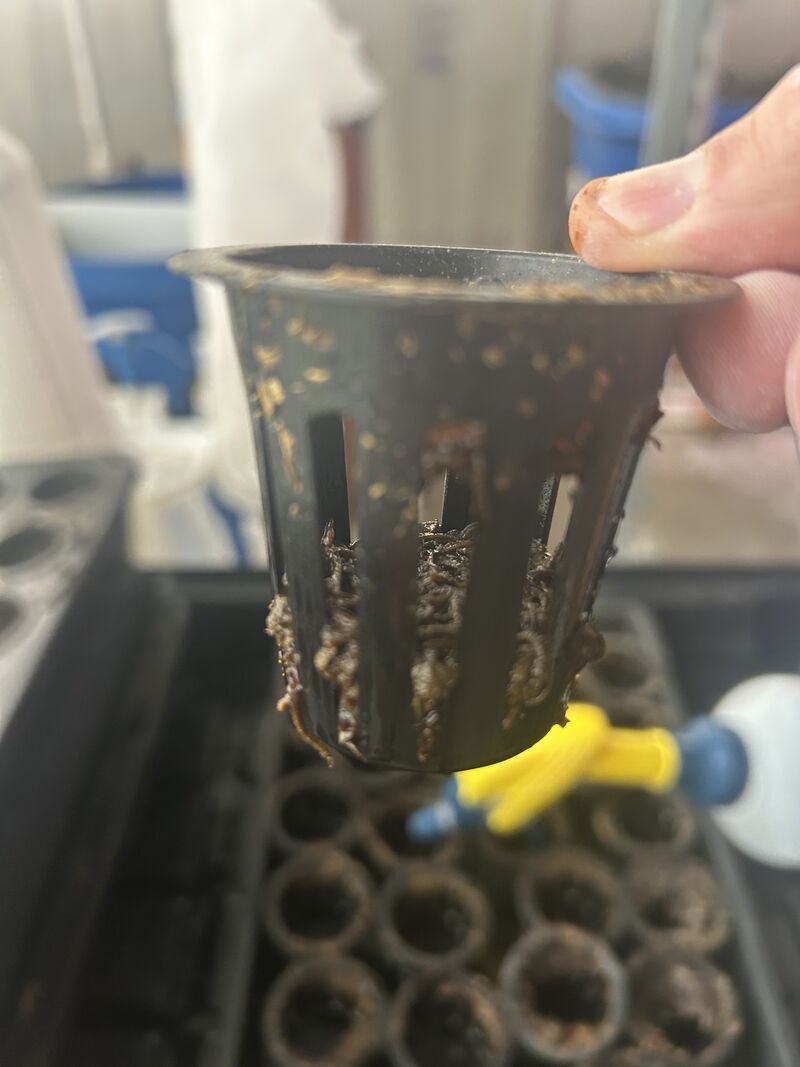
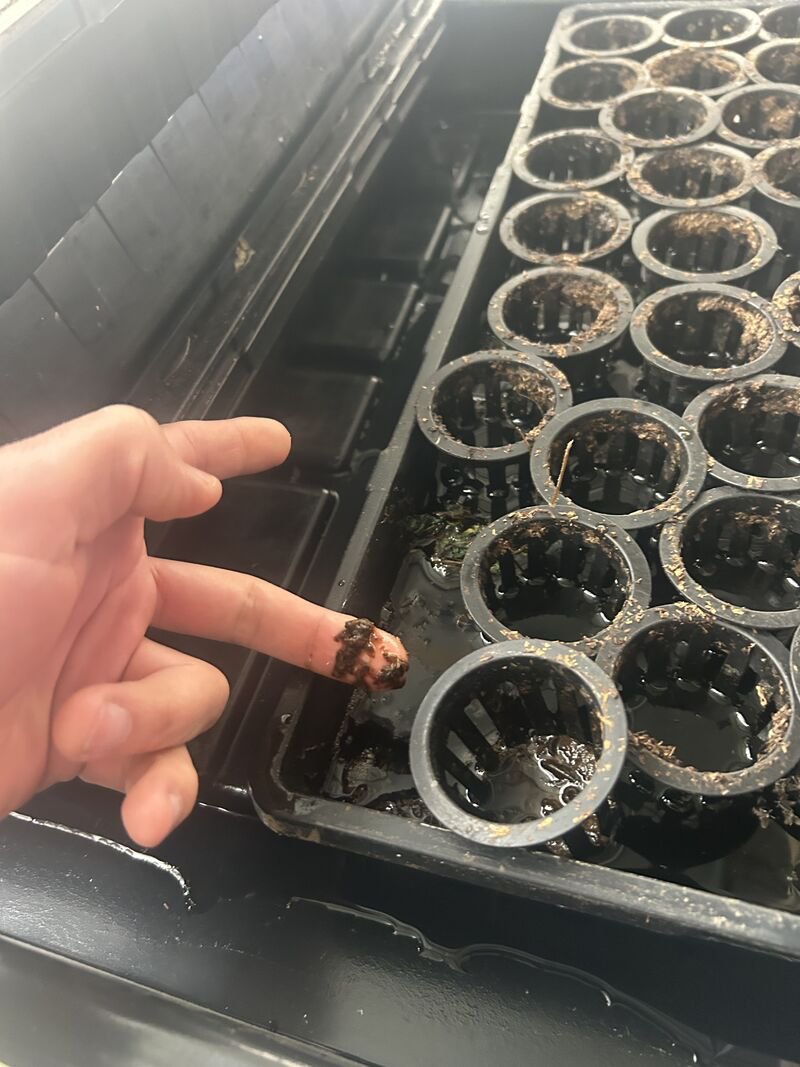
We have also seen physical changes. About half the time, 100% frass develops a strong odor and turns sludge-like, seeping out of net pots or trays. Other times it dries into a dense layer that seedlings cannot push through. Because frass is a living, decomposed material, we have also seen fungus gnats emerge. They were not black soldier flies, and they have not been a major problem.
Determining the ratio of frass in seedling trials.
Performance improves a little as we lower the share of frass. Next we will test 50% and lower, including mixes of 1 part frass to 2 or 3 parts growing media. We are also looking at watering method, container design, and pH and electrical conductivity in 100% frass. The mix, the container, and the watering strategy may matter as much as the material itself.
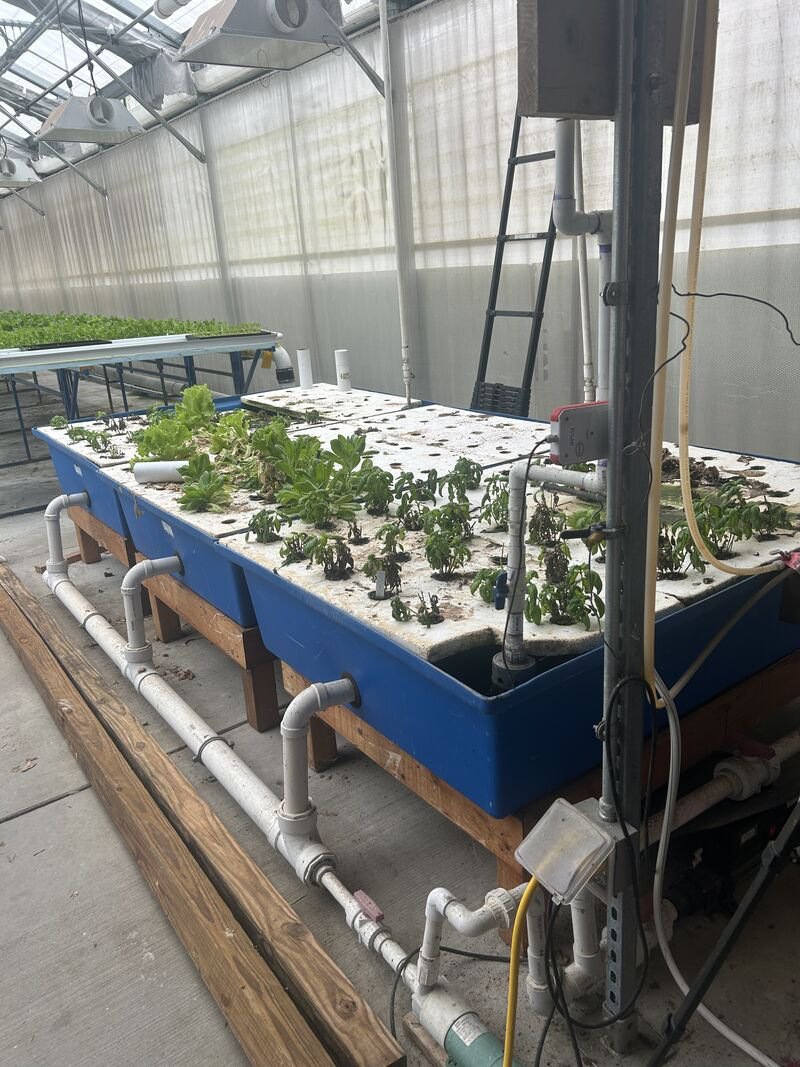
We started a new round of trials to see how frass can be used in urban agriculture production. We are testing several growing media mixed with frass as a base for growing lettuce and basil in hydroponic systems.
Hydroponic basil and lettuce in one of our trial systems.
This work is being conducted in partnership with Greenway Farms and is funded by a Northeast Sustainable Agriculture Research and Education (SARE) grant.